Expanding Beyond Genocide: Call for Submissions
Background
Beyond Genocide is a pioneering visual art opus that develops thematic currents of narration examining a pan-historic chronology and geography of mass atrocity events. Advancing awareness and scholarship at the intersection of genocide and the arts contributes critically to a deeper understanding of human behavior, promoting empathy and social change, and serves as a powerful tool for preventing future atrocities. Beyond Genocide is singularly structured to shed light on the many facets of inquiry and critical reflection of pivotal mass atrocities around the globe and throughout history where traditional academic studies may not capture.
New Vision
In 2024, Beyond Genocide received generous funding to expand and complete the series, supporting the development of new commissioned works that will add to and converse with the existing collection.
As the project enters its next phase, the original international art competition model is evolving into an International Curatorial Commission Series. This approach will allow each new work to be developed through a thoughtful curatorial process responsive to the particular history, culture, artistic traditions, and circumstances of each case study.
Project organizer Amy Fagin continues to work with an Arts Awards Advisory Council with expertise in genocide studies, artistic expression, exhibition practices, communications, and outreach. Together, they are developing the framework for future commissions and identifying artists, artistic collectives, and other potential collaborators whose practices can contribute meaningfully to the ongoing vision of Beyond Genocide
The Beyond Genocide commission model is currently being reimagined as the project enters its next phase. Details about forthcoming commissions will be announced as the curatorial framework develops.
Project Structure & Theme
The International Curatorial Commission Series will introduce new works that respond to and are in conversation with the existing Beyond Genocide exhibition. Each commission will be developed with attention to the particular history and cultural context of its case study, while contributing to the larger objective of “thinking through art.”
The series seeks to bring artistic excellence, cultural perspective, historical inquiry, and meaningful public engagement into conversation, creating works that deepen understanding of genocide and its human consequences.
Selection / Curatorial Process
Future commissions will be developed through a curatorial process that considers the artistic practice, cultural perspective, and relationship to the particular case study, as well as the potential of the proposed work to contribute to the educational and public objectives of Beyond Genocide.
The Arts Awards Advisory Council will continue to provide expertise and perspective as the framework for future commissions evolves.
Exhibition & Public Engagement
Completed commissions will become part of the evolving Beyond Genocide exhibition and educational program. Each new work will be accompanied by opportunities for interpretation, dialogue, and public engagement, connecting the artwork to its historical case study and to the larger themes of the series.
Future commissions will explore the following proposed following case studies:
- Palestine / Israel
- Rohingya / Myanmar
- Rwanda / Burundi
- Soviet Union under Stalin
- Sudan
- Uganda
- Yezidi
- Yugoslavia (former): Winning Award Announced April 30, 2025.
The inaugural exhibition: Beyond Genocide & Echoes of Abandonment opened October 20th, 2025 at the Roger Ballen Centre for Photography at the Inside Out Centre for the Arts Johannesburg South Africa. The awards ceremony took place at the International Association of Genocide Scholars biennial conference in Johannesburg, South Africa. Artworks submitted for this exhibition were donated and acquired by the Johannesburg Holocaust and Genocide Centre for their permanent collection.
To Submit
Submission files are available for viewing. Submission Portal for 2025 – 2026 competition is open from December 1st, 2025 to April 1st, 2026 @ 23:59 hours.
Contact
For more information, email Amy Fagin at info@beyondgenocide.net
Arts Award Advisory Council 2025 – 2026 Cycle
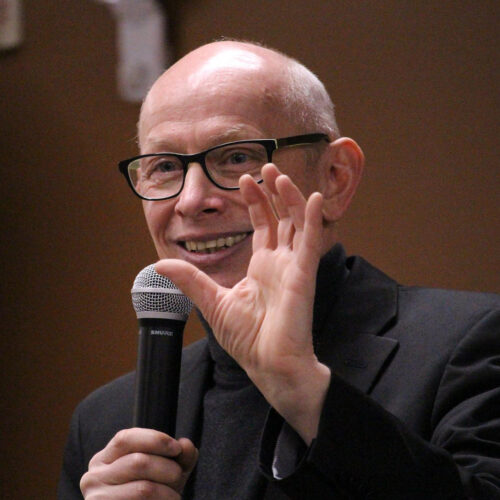 Dr. Bjorn Krondorfer is a Regents’ Professor and Director of the Martin-Springer Institute at Northern Arizona University, where he also teaches Religious Studies. He has held guest faculty positions in Berlin, South Africa, and Amsterdam. Since 2020, he has chaired the national “Consortium of Higher Education Centers for Holocaust, Genocide, and Human Rights Studies” and serves on the Honorary Committee for the Social Museum of Jewish History in Kielce, Poland. His recent books include Unsettling Empathy (2020) and The Holocaust and Masculinities (2020). Dr. Krondorfer has organized numerous academic symposia and exhibitions, including Echoes of Loss (2018) and Wounded Landscapes (2014).
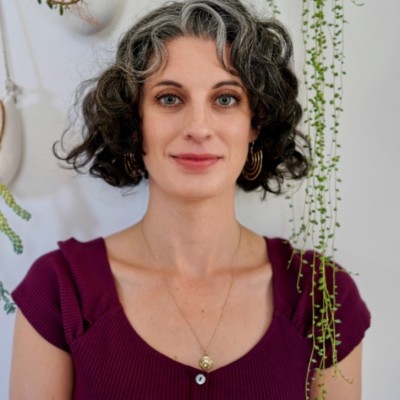 Dr. Alexis Herr is a Holocaust historian dedicated to preventing genocide and human rights violations. She holds a Ph.D. from Clark University’s Strassler Center for Holocaust and Genocide Studies and currently lectures at the University of San Francisco. As co-founder and Director of Education for the Cambodian Genocide Resource Center, her work emphasizes genocide education. She has received numerous awards, including fellowships from the Holocaust Educational Foundation and US Holocaust Memorial Museum. Her publications include The Holocaust and Compensated Compliance in Italy (2016) and upcoming LGBTQ+ and the Holocaust (2025). Dr. Herr also edited key reference guides on Rwanda and Sudan.
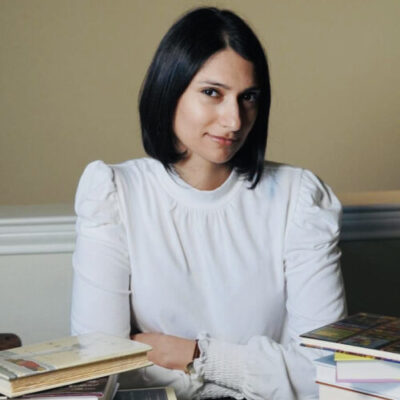 Dr. Sabah Carrim is a Postdoctoral Scholar in Holocaust and Genocide Studies at the Martin-Springer Institute and a Visiting Scholar at Rutgers University’s Center for the Study of Genocide and Human Rights (CGHR). She serves as Arts & Literature Editor for Genocide Studies and Prevention: An International Journal and co-hosts Not to Forgive, But to Understand, a podcast on genocide studies. A five-time judge for the African Writers Award, she won the 2024 Afritondo Short Story Prize and the 2019 AfroYoung Adult Short Story Competition. Author of Humeirah and Semi-Apes, she is widely published across Africa, Asia, the UK, and the US.